

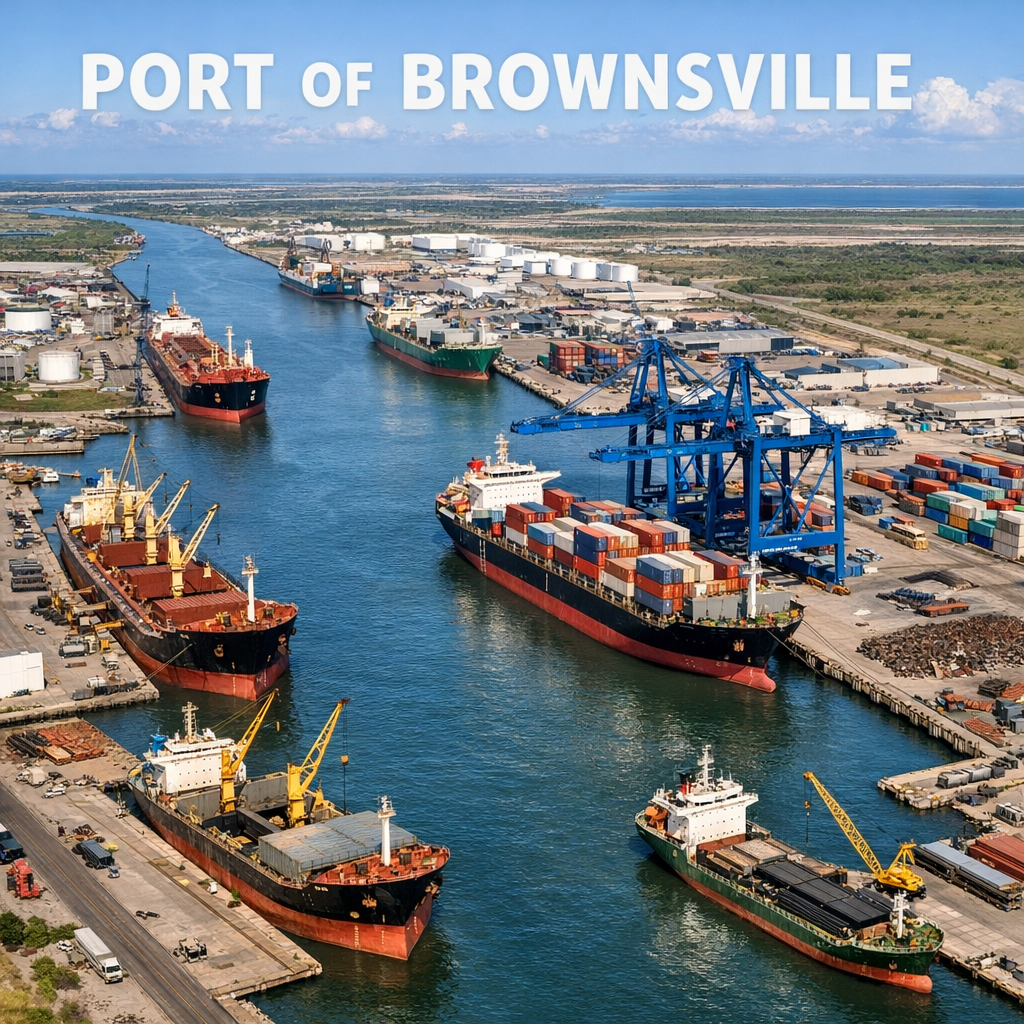
Established in 1936, the Port of Brownsville has transformed from a modest agricultural shipping point into a pivotal gateway for global trade. As it marks its 90th anniversary, the port stands as a testament to strategic development and economic resilience.
A Legacy of Growth
Over the decades, the port has diversified its operations, handling commodities ranging from agricultural products to steel and energy resources. This evolution has attracted significant private investment, positioning the port as one of Texas’s fastest-growing manufacturing and logistics hubs.
Economic Impact
In 2024, the port’s activities accounted for $22.7 billion in trade, more than doubling its 2003 figures. This surge underscores its critical role in international commerce and its contribution to the state’s economy. The port supports approximately 101,000 jobs and adds $11.9 billion to Texas’s gross domestic product.
Infrastructure Enhancements
To accommodate larger vessels and increase operational efficiency, the port has initiated the Brazos Island Harbor Channel Improvement Project. This endeavor aims to deepen the ship channel from 42 to 52 feet, enhancing navigational safety and reinforcing the port’s status in global trade networks.
Community and Environmental Considerations
While the port’s expansion brings economic benefits, it also prompts discussions about environmental stewardship and community impact. Collaborative efforts between port authorities, environmental groups, and local residents are essential to ensure sustainable growth that respects the region’s ecological balance.
The Port of Brownsville’s journey from a regional agricultural hub to an international trade powerhouse exemplifies the dynamic interplay between global events and local development. Its continued success will depend on balancing economic ambitions with environmental responsibility and community engagement.