
By Emma Garcia
What is the Shape of Global Displacement?
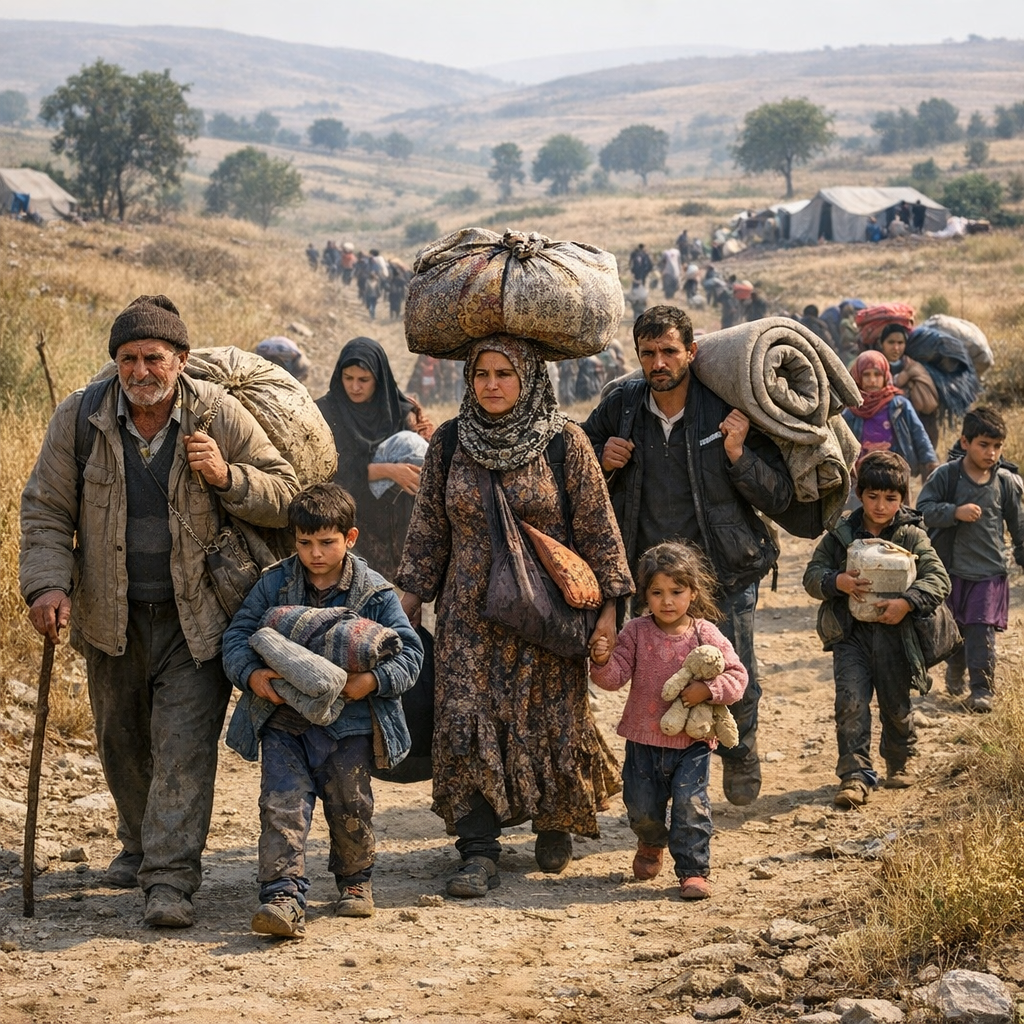
At the end of 2025, nearly 118 million people around the world were forcibly displaced due to conflict, persecution, violence, or human rights abuses. This includes both refugees (traditionally those who cross international borders) and internally displaced people (IDPs) who remain within their own countries. The number represents a slight decrease from 2024, largely driven by returns of displaced individuals under challenging conditions.
The largest displacement crisis internally is in Sudan, with over 9 million people uprooted within the country’s borders. Other major sources of refugee flows include Afghanistan, Syria, Venezuela, South Sudan, and Ukraine.
Why Are So Many on the Move?
Several interlinked forces push people to flee their homes:
- Conflict and violence: Ongoing wars and civil strife—those in Sudan, Yemen, Syria—continue to displace populations in huge numbers.
- Persecution and human rights abuses: Minorities and marginalized groups are often targeted, leading to forced migration.
- Climate change and disasters: Desertification, floods, and storms increasingly render parts of the world unlivable, especially where governments can’t or don’t respond.
- Economic collapse and governance failure: When systems break down—lack of food, medicine, security—people leave what they know to seek basic survival.
Where Do Displaced People Go?
Most refugees end up staying in neighboring countries or regions with fewer resources. More than two-thirds of those fleeing conflict and persecution remain in low- and middle-income countries—places that often lack adequate infrastructure to support large new populations. Neighboring nations host about 65% of all refugees, many of whom live in precarious conditions in informal settlements or camps.
What Are the Challenges of Returning or Resettling?
While there was some decline in global refugee numbers, much of it came due to return movements. However, these returns are seldom easy. Returning home doesn’t always mean returning to safety. Conditions like destroyed infrastructure, lingering violence, lack of housing, and economic instability make reintegration deeply difficult—often leaving returnees in limbo without reliable access to work, healthcare, or protection.
Global Responses and Where Things Are Headed
International institutions and governments are trying to adapt with several approaches:
- Humanitarian aid coordination: United Nations agencies and NGOs work together to deliver food, shelter, medical care, especially in high-need regions.
- Long-term development focus: Policies increasingly emphasize giving refugees access to education, legal work opportunities, social services—to avoid displacement becoming a forever crisis.
- Climate adaptation programs: As climate becomes a cause of forced migration, global efforts are pushing for stronger resilience, disaster-risk reduction and supports for the most vulnerable.
- Legal protection and rights: Advocates and international law aim to secure the rights of displaced persons, including seeking durable solutions, fighting statelessness, and ensuring non-return to danger.
Why It Matters Here
From Brownsville, we see reflections of these global strains: migrants crossing the U.S.-Mexico border escaping similar traumas—conflict, persecution, environmental collapse. Global displacement statistics aren’t just numbers far away; they echo in our communities, in demands for resources, for legal protection, and for compassion.
Understanding forced displacement beyond the headlines helps us to see shared human struggles—and shared responsibility.