

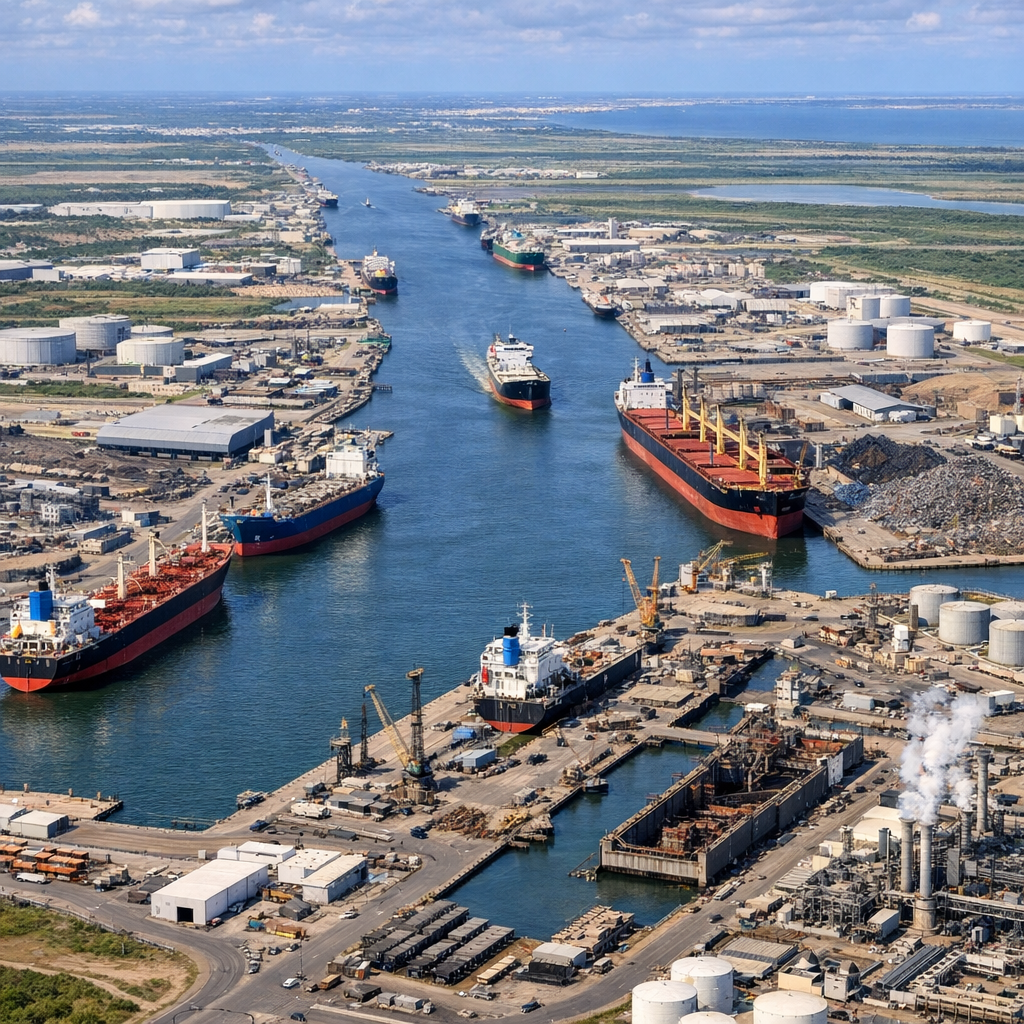
In 2026, the Port of Brownsville marks its 90th anniversary, reflecting on a journey from its agricultural roots to becoming a pivotal player in global commerce. Established in 1936, the port has significantly influenced the economic landscape of South Texas.
Historical Transformation
Originally serving as a conduit for agricultural products, the Port of Brownsville has diversified its operations over the decades. Today, it handles a wide array of commodities, including steel, energy products, and construction materials, positioning itself as a versatile logistics hub.
Economic Impact
The port’s evolution has had a profound impact on the local economy. In 2024, shipping activities through the port accounted for $22.7 billion in trade, more than doubling the figures from 2003. This growth underscores the port’s role in fostering economic development and job creation in the region.
Global Trade Connections
As the only deepwater seaport on the Texas-Mexico border, the Port of Brownsville serves as a critical gateway for international trade. Its strategic location facilitates robust trade relations, particularly with Mexico, which receives a significant portion of the port’s exports.
Future Prospects
Looking ahead, the port continues to expand its capabilities. Projects like the Brazos Island Harbor Channel Improvement aim to deepen the ship channel, allowing larger vessels to access the port and further enhancing its competitiveness in global markets.
The Port of Brownsville’s 90-year legacy is a testament to its adaptability and enduring significance in both local and international trade. As it continues to grow, the port remains a cornerstone of economic prosperity for Brownsville and the broader South Texas region.